---
title: "NetSuite AI Tools: Transforming ERP with Intelligent Automation"
description: Discover how Oracle NetSuite AI transforms business operations. From Predictive Analytics to Prompt Studio and Bill Capture, explore the ultimate intelligent ERP suite.
image: https://blog.ennvee.com/hubfs/ai-data.jpg
---
- Services & Technologies
- Services
- [Data & AI](https://ennvee.com/data-and-ai/)
- [Digital Transformation](https://ennvee.com/digital-transformation/)
- [Data Intelligence](https://ennvee.com/data-intelligence/)
- [Technologies](https://ennvee.com/technologies/)
- [Oracle Fusion Cloud](https://ennvee.com/oracle-fusion/)
- [Oracle E-Business Suite](https://ennvee.com/oracle-ebs/)
- [Oracle JD Edwards](https://ennvee.com/oracle-jde/)
- [Oracle NetSuite](https://ennvee.com/oracle-netsuite/)
- [Cloud Infrastructure (IaaS)](https://ennvee.com/oracle-cloud-infrastructure/)
- [Microsoft Dynamics](https://ennvee.com/microsoft-dynamics-365/)
- [Salesforce](https://ennvee.com/salesforce-cloud-services/)
- [Application Development & Integration](https://ennvee.com/application-integration-services/)
- [SAP](https://ennvee.com/sap/)
- [Tools & Accelerators](https://ennvee.com/accelerators/)
- [ennABLE](https://ennvee.com/accelerators/oracle-ebs-r12-2-upgrade-automation/)
- [ennAccess](https://info.ennvee.com/jde-user-access-record-tool)
- [TrendZ](https://ennvee.com/accelerators/oracle-proactive-system-monitoring/)
- [EDI](https://ennvee.com/accelerators/oracle-edi-automation-tool/)
- Products & Solutions
- [ennSCM](https://ennvee.com/products/ennscm/)
- [ennData 360](https://ennvee.com/products/enndata360/)
- [AI ILMS](https://ennvee.com/products/ai-ilms/)
- [AI in Finance Operations](https://ennvee.com/products/ai-in-finance-operations/)
- [Expense Application](https://ennvee.com/products/expense-application/)
- [Chatbot](https://ennvee.com/products/chatbot/)
- [Field Sales Pro](https://ennvee.com/products/field-sales-pro/)
- [AI - Powered Ticketing Tool](https://ennvee.com/products/ai-powered-ticketing-tool/)
- [AI - Powered PO to SO](https://ennvee.com/products/ai-powered-po-so/)
- [AI - Resume Grader](https://ennvee.com/products/ai-resume-grader/)
- Insights
- [Blogs](https://blog.ennvee.com/blog)
- [Datasheets](https://ennvee.com/data-sheets/)
- [Case Studies](https://ennvee.com/case-studies/)
- [Whitepapers](https://ennvee.com/white-papers/)
- Company
- [About](https://ennvee.com/about-us/)
- [Careers](https://ennvee.com/careers/)
- [News and Events](https://ennvee.com/news-and-events/)
- [Contact Us](https://ennvee.com/contact-us/)
×
Search
- Services & Technologies
- Services
- [Data & AI](https://ennvee.com/data-and-ai/)
- [Digital Transformation](https://ennvee.com/digital-transformation/)
- [Data Intelligence](https://ennvee.com/data-intelligence/)
- [Technologies](https://ennvee.com/technologies/)
- [Oracle Fusion Cloud](https://ennvee.com/oracle-fusion/)
- [Oracle E-Business Suite](https://ennvee.com/oracle-ebs/)
- [Oracle JD Edwards](https://ennvee.com/oracle-jde/)
- [Oracle NetSuite](https://ennvee.com/oracle-netsuite/)
- [Cloud Infrastructure (IaaS)](https://ennvee.com/oracle-cloud-infrastructure/)
- [Microsoft Dynamics](https://ennvee.com/microsoft-dynamics-365/)
- [Salesforce](https://ennvee.com/salesforce-cloud-services/)
- [Application Development & Integration](https://ennvee.com/application-integration-services/)
- [SAP](https://ennvee.com/sap/)
- [Tools & Accelerators](https://ennvee.com/accelerators/)
- [ennABLE](https://ennvee.com/accelerators/oracle-ebs-r12-2-upgrade-automation/)
- [ennAccess](https://info.ennvee.com/jde-user-access-record-tool)
- [TrendZ](https://ennvee.com/accelerators/oracle-proactive-system-monitoring/)
- [EDI](https://ennvee.com/accelerators/oracle-edi-automation-tool/)
- Products & Solutions
- [ennSCM](https://ennvee.com/products/ennscm/)
- [ennData 360](https://ennvee.com/products/enndata360/)
- [AI ILMS](https://ennvee.com/products/ai-ilms/)
- [AI in Finance Operations](https://ennvee.com/products/ai-in-finance-operations/)
- [Expense Application](https://ennvee.com/products/expense-application/)
- [Chatbot](https://ennvee.com/products/chatbot/)
- [Field Sales Pro](https://ennvee.com/products/field-sales-pro/)
- [AI - Powered Ticketing Tool](https://ennvee.com/products/ai-powered-ticketing-tool/)
- [AI - Powered PO to SO](https://ennvee.com/products/ai-powered-po-so/)
- [AI - Resume Grader](https://ennvee.com/products/ai-resume-grader/)
- Insights
- [Blogs](https://blog.ennvee.com/blog)
- [Datasheets](https://ennvee.com/data-sheets/)
- [Case Studies](https://ennvee.com/case-studies/)
- [Whitepapers](https://ennvee.com/white-papers/)
- Company
- [About](https://ennvee.com/about-us/)
- [Careers](https://ennvee.com/careers/)
- [News and Events](https://ennvee.com/news-and-events/)
- [Contact Us](https://ennvee.com/contact-us/)
# AI in NetSuite - How Oracle’s ERP Platform Transforms Business Operations
[← All posts](https://blog.ennvee.com/blog)
13 MIN READ

*Authored by*
**Jeyakumar Shanmugam**
Senior Director | NetSuite
Last Updated: 17 June 2026 | Published: 11 June 2026
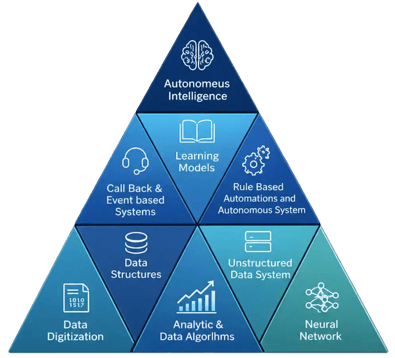
We may feel like artificial intelligence appeared overnight in the business world, but the reality tells a different story. While AI in NetSuite has become mainstream only in recent years, the groundwork for this technology began in the early 1900s, with the biggest strides made in the 1950s. Today’s autonomous, self-learning intelligence wouldn’t exist without decades of innovation across multiple fields that now converge in the world of Artificial Intelligence and Enterprise Resource Planning.
The evolution of AI in NetSuite demonstrates Oracle’s commitment to intelligent automation. As artificial intelligence invaded all industry solutions, it created a strong footprint in enterprise management systems too. NetSuite AI represents a significant advancement in enterprise resource planning technology, moving beyond simple automation to deliver intelligent insights and proactive business management.
## **The Journey of AI in Enterprise Resource Planning**
Artificial intelligence in ERP systems represents an exponential leap in how companies manage their operations, resources, and decision-making processes. AI technologies first appeared in ERP systems during the 2000s, initially **automating routine tasks like data entry, analysis, financial transactions, and basic customer service interactions.**
In recent years, technologies including machine learning, natural language processing, and robotic process automation have allowed ERP systems to automate complex tasks and drive sharper decision-making. Organizations implementing NetSuite AI report enhanced decision-making capabilities and reduced manual workload across their operations.
By leveraging **AI’s data analytics capabilities and machine learning models**, ERP systems can now automate routine tasks such as invoice processing, and more complex processes like predictive financial forecasting. Understanding AI in NetSuite helps organizations maximize their ERP investment and operational efficiency while staying ahead of market changes.
For example, by analyzing trends in customer behavior and market dynamics, companies can forecast changes in demand and proactively adjust production schedules, marketing strategies, or product development plans to remain competitive.
## **NetSuite Next: Oracle’s Vision for AI-Powered ERP**
The main philosophy behind Oracle’s approach to AI Incubation centers on “Advice and Assist.” NetSuite Next represents the future of AI-powered ERP solutions, where artificial intelligence serves as a secondary assistant built within the system. This approach focuses on monitoring data patterns, running learning models both inside the core NetSuite framework, and utilizing external Oracle Intelligence cloud services.
The Oracle NetSuite AI platform provides enterprise-grade intelligence that scales with business growth. This strategy ensures that AI doesn’t replace human decision-making but enhances it through intelligent recommendations and automated actions designed to increase productivity and reduce manual work.
### **Uncovering Patterns Through Intelligent Analysis**
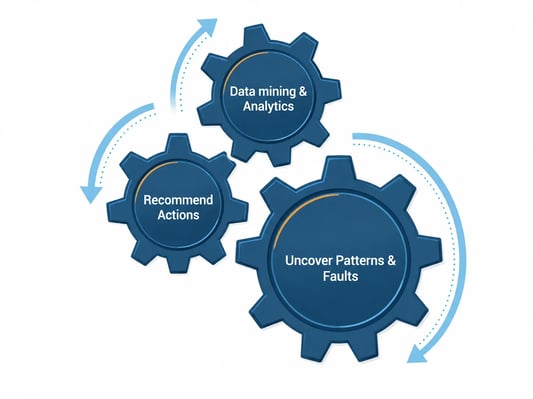
NetSuite AI capabilities extend beyond basic automation to include predictive analytics and intelligent recommendations. The system uncovers patterns and provides actionable insights through machine learning and data analytics. For instance, it can identify bottlenecks in supply chain logistics by analyzing patterns in order-processing times, delivery efficiency, and supplier performance.
The platform also excels at detecting suspicious financial movements, such as abnormal payment patterns to vendors. This empowers businesses to make data-driven improvements that bolster operational efficiency and reduce costs while maintaining security and compliance standards.
### **Recommendations and Autonomous Actions**
NetSuite embeds AI capabilities natively across its ERP suite to provide intelligent recommendations, predictive insights, and automated actions. These AI features are trained on NetSuite’s unified transactional data, allowing them to suggest actions, detect anomalies, and generate content in real-time.
The diverse NetSuite AI capabilities enable businesses to automate complex processes while maintaining accuracy. The system goes beyond recommendations to take autonomous actions at the right time with minimal manual intervention. Machine learning capabilities help NetSuite learn from periodic results and self-correct its performance over time.
Here’s a lightly enhanced version with improved SEO alignment and an enterprise tone—while staying true to your original intent and language:
### **Data Mining and Advanced Analytics**
ERP systems consolidate vast volumes of cross-departmental operational data, including finance, human resources (HR), and customer data. Data mining and advanced analytics capabilities leverage this data to uncover patterns, correlations, and actionable insights that are not immediately apparent—supporting more informed, intelligent decision-making across the enterprise.
These analytics capabilities provide a deeper understanding of business operations, customer behavior, and evolving market trends. In practice, data mining and advanced analytics play a critical role in demand forecasting, identifying cost optimization opportunities, and improving supply chain performance.
The outcome is a more proactive, data-driven operating model—enabling tighter operational efficiency, reduced costs, and improved customer experience across the organization.
**Understanding NetSuite AI: From Classic to Generative Intelligence**
NetSuite AI initiatives include various types of AI models available in the industry: Classic/Predictive, Generative, and Agentic. The integration of NetSuite AI across business processes delivers measurable operational improvements through this multi-faceted approach.
### Classic AI: The Foundation of Predictive Intelligence
Classic AI analyzes historic data to forecast future outcomes. These AI interventions primarily focus on forecasting, recommendations, and risk analysis. Key applications include:
Intelligent Item Records that learn from past transactions and customer behavior patterns. Bill Capture technology that automatically processes vendor invoices with high accuracy. Exception Management systems that identify and flag unusual transactions or data anomalies. Periodic Forecasts that help businesses plan inventory, staffing, and financial resources based on historical trends and seasonal patterns.
### Generative AI: Creating Content and Insights
Generative AI targets creating fresh, new content independently while supporting users in their daily operational journey. This technology leverages existing data patterns and intensive learning capabilities to consistently improve output quality.
The content generated can take various forms including text, images, or code snippets. NetSuite AI features include everything from intelligent item recommendations to financial anomaly detection, all powered by generative capabilities that adapt to specific business contexts.
Key generative AI tools include Text Enhance for creating product descriptions and communications, Prompt Studio for customizing AI interactions, Narrative Insights that translate data into readable business stories, SuiteCloud Dev Assist for development support, and GenAI APIs for custom integrations.
### Agentic AI: Autonomous Business Operations
Agentic AI excels at offloading manual-intensive operations, performing work far beyond typical automation algorithms. These agents are carefully designed to perform routine actions with minimal oversight, deployed across multiple enterprise areas including planning, decision-making, and system interactions.
The AI Connector Service exemplifies this approach, allowing businesses to connect third-party AI models to NetSuite data for specialized analysis. This “Bring Your Own AI” capability enables organizations to leverage best-of-breed AI solutions while maintaining data integration and workflow continuity.
### **Essential NetSuite AI Features Every Business Should Know**
Oracle NetSuite AI combines the power of cloud computing with advanced machine learning algorithms to deliver practical business value. These NetSuite AI features work together to create a seamless, intelligent business management experience across multiple functional areas.
#### Sales and Customer Management
Intelligent Item Recommendations suggest products during sales orders, estimates, and ecommerce interactions based on customer buying history, purchasing patterns of similar customers, and frequently bought-together items. This feature increases average order values while improving customer satisfaction through relevant suggestions.
AI-Driven Customer Summaries (Customer 360) generate narrative summaries of customer interactions, sentiment analysis, and support case histories. These insights provide actionable intelligence for service agents and sales teams, enabling more personalized and effective customer engagement.
#### Financial Management and Compliance
Financial Anomaly Detection and Correction continuously scans financial data to detect exceptions or anomalies in journal entries, invoices, and other financial transactions. The system suggests corrective actions, helping maintain accuracy and compliance while reducing the risk of fraud or errors.
Bank Transaction Matching uses generative AI to automatically match bank transactions to general ledger entries, recommending matches for faster reconciliation. This feature significantly reduces the time spent on month-end closing processes while improving accuracy.
Cash Flow Management analyzes accounts payable and receivable data to provide recommendations on vendor payment timing. The system helps businesses take advantage of early payment discounts while maintaining optimal working capital levels.
#### Planning and Forecasting
Predictive Planning and Budgeting leverages Intelligent Performance Management (IPM) to analyze plans and forecasts. The system highlights trends and recommends adjustments to projections based on real-time business activities, enabling more accurate and responsive financial planning.
#### Document Processing and Automation
NetSuite Bill Capture uses AI-based document object detection and optical character recognition (OCR) to scan, extract, and enter vendor invoice data automatically. This eliminates manual data entry while maintaining high accuracy levels and reducing processing time.
NetSuite Text Enhance assists employees in creating content such as product descriptions, job requisitions, and personalized collection emails. The tool maintains brand consistency while reducing the time required for content creation.
## **List of AI Tools**
NetSuite Expert (AI Agent) provides tailored, natural-language guidance and troubleshooting based on SuiteAnswers. This AI agent helps users resolve issues within the application, reducing support tickets and improving user productivity.
Prompt Studio allows administrators to configure the tone, format, and creativity of AI-generated content, ensuring that automated communications align with company standards and brand voice.
NetSuite Text Enhance is an Generative AI that assists employees in creating content such as product descriptions, job requisitions, and personalized collection emails.
NetSuite Bill Capture uses AI-based document object detection and OCR to scan, extract, and enter vendor invoice data automatically.
NetSuite AI Connector allows to "Bring Your Own AI" (BYO-AI), enabling businesses to connect third-party AI models (e.g., Claude, GPT) to NetSuite data for specialized analysis.
### **Real-World Impact: Data Mining and Advanced Analytics**
ERP systems consolidate vast amounts of cross-departmental operational data, including finance, human resources, and customer information. Data mining and advanced analytics technologies scour this data to uncover patterns, correlations, and insights that support intelligent decision-making and deep understanding of business operations, customer behavior, and market trends.
These capabilities play important roles in predicting future demand, identifying cost-saving opportunities, and optimizing supply chain operations. The result is more proactive, data-driven decisions that lead to tighter operational efficiency, reduced costs, and improved customer satisfaction.
Businesses leveraging AI in NetSuite gain competitive advantages through predictive analytics and automated workflows that respond to changing market conditions in real-time. The system’s ability to learn from historical data while adapting to new patterns ensures that recommendations become more accurate and valuable over time.
### **The Future of Intelligent ERP**
The incubation of AI in Oracle NetSuite represents more than technological advancement—it signals a fundamental shift toward proactive, intelligent business management. As these AI features continue to evolve and learn from business operations, they shift organizations from reactive, manual processes to proactive, automated ones, particularly in accounts receivable and payable, sales, and supply chain management.
The “Advice and Assist” philosophy ensures that AI enhances human decision-making rather than replacing it. This approach creates a partnership between human expertise and artificial intelligence, where technology handles routine tasks and pattern recognition while humans focus on strategic thinking and relationship building.
Organizations considering AI implementation in their ERP systems should focus on understanding how these tools can address specific business challenges while maintaining the flexibility to adapt as AI capabilities continue advancing. The key lies not in adopting every available AI feature, but in strategically implementing those that deliver measurable value to core business processes.
As NetSuite continues developing its AI capabilities, businesses that embrace these tools early will establish competitive advantages through improved efficiency, better decision-making, and enhanced customer experiences. The future belongs to organizations that successfully blend human insight with artificial intelligence to create more responsive, efficient, and profitable operations.
Watch us continuously to learn more on the below titles soon …
- Deep dive on Intelligence Tools in NetSuite – More practical samples
- How AI plays a key role in ERP Systems
- AI Driven Development Assistant
### Tags
[Oracle Integration](https://blog.ennvee.com/blog/tag/oracle-integration)
### Recent Posts
- [Oracle Integration Cloud: Making Enterprise Integrations Work in Practice](https://blog.ennvee.com/blog/oracle-integration-cloud-enterprise-use-cases-best-practices)
- [JDE Orchestrator and Oracle Integration Cloud for Warehouse Management System Integration](https://blog.ennvee.com/blog/jde-orchestrator-oic-wms)
## You Might Also Like...
[BLOG JDE Orchestrator and Oracle Integration Cloud for Warehouse Management System Integration](https://blog.ennvee.com/blog/jde-orchestrator-oic-wms)
[BLOG JD Edwards Release Readiness Guide: How to Get More Value from JDE Releases](https://blog.ennvee.com/blog/jd-edwards-release-readiness-guide)
[BLOG Oracle Integration Cloud: Making Enterprise Integrations Work in Practice](https://blog.ennvee.com/blog/oracle-integration-cloud-enterprise-use-cases-best-practices)
- [SERVICES](https://ennvee.com/services/)
- [Oracle Fusion Cloud](https://ennvee.com/oracle-fusion/)
- [Oracle E-Business Suite](https://ennvee.com/oracle-ebs/)
- [Oracle JD Edwards](https://ennvee.com/oracle-jde/)
- [Oracle NetSuite](https://ennvee.com/netsuite/)
- [Cloud Infrastructure (laaS)](https://ennvee.com/infrastructure-iaas/)
- [Robotic Process Automation (RPA)](https://ennvee.com/robotic-process-automation/)
- [INNOVATIONS](https://ennvee.com/accelerators/)
- [Accelerators](https://ennvee.com/accelerators/#ProprietaryAccelerators)
- [Products](https://ennvee.com/accelerators/#Products)
- [INSIGHTS](https://ennvee.com/resources/)
- [Blog](https://blog.ennvee.com/blog)
- [Data Sheets](https://ennvee.com/data-sheets/)
- [Case Studies](https://ennvee.com/case-studies/)
- [White Papers](https://ennvee.com/white-papers/)
- CONTACT INFORMATION
- US: +1-630-364-1911
- India: +91-93848 42661
- mail: corp@ennvee.net
-
[© ennVee. All Rights Reserved.](https://ennvee.com/legal-notice/)
- [privacy policy](https://ennvee.com/privacy-policy/)
- [site map](https://ennvee.com/page-sitemap.xml)

- Services
- [Oracle Fusion Applications](https://ennvee.com/oracle-saas-applications/)
- [NetSuite](https://ennvee.com/netsuite/)
- [Microsoft Dynamics](https://ennvee.com/microsoft-dynamics-365/)
- [Salesforce](https://ennvee.com/salesforce/)
- [Infrastructure (IaaS)](https://ennvee.com/infrastructure-iaas/)
- [Application Managed Services](https://ennvee.com/application-managed-services/)
- [Robotic Process Automation (RPA)](https://ennvee.com/robotic-process-automation/)
- [Application Integration Services](https://ennvee.com/application-integration-services/)
- [Accelerators](https://ennvee.com/accelerators/)
- [Oracle EBS Upgrade Automation](https://ennvee.com/accelerators/oracle-ebs-r12-2-upgrade-automation/)
- [Oracle Proactive System Monitoring](https://ennvee.com/accelerators/oracle-proactive-system-monitoring/)
- [Oracle Discoverer Migration Tool](https://ennvee.com/accelerators/oracle-discoverer-migration-tool/)
- [Oracle EDI Automation Tool](https://ennvee.com/accelerators/oracle-edi-automation-tool/)
- Resources
- [Blog](https://blog.ennvee.com/blog)
- [Data Sheets](https://ennvee.com/data-sheets/)
- [Case Studies](https://ennvee.com/case-studies/)
- [Webinars](https://ennvee.com/webinars/)
- [White Papers](https://ennvee.com/white-papers/)
- [Careers](https://ennvee.com/careers/)
[](https://www.linkedin.com/company/ennvee/) [](https://www.facebook.com/ennveetechnogroup/) [](https://twitter.com/ennVeeTech) [](https://www.instagram.com/ennvee_india/)
[© ennVee. All Rights Reserved.](https://ennvee.com/legal-notice/)
[Privacy Policy](https://ennvee.com/privacy-policy/) [Site Map](https://ennvee.com/page-sitemap.xml)
